
Product Overview
Integrated industrial machinery engineered for automated batching, high-shear mixing, multi-stage hydraulic molding, and thermal curing of resin-bonded grinding wheels and cutting discs. The system coordinates raw material handling mechanisms with high-tonnage compaction presses and continuous curing kilns to maintain uniform density and structural integrity across high-speed abrasive products.
-
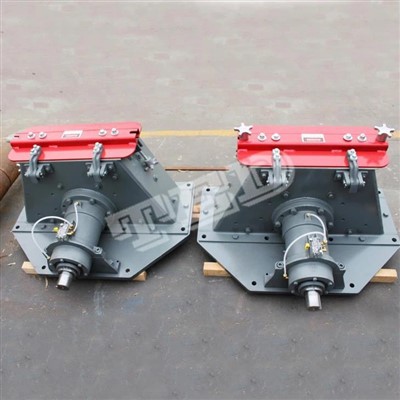
![Resin-bonded Sand Automatic Moulding Machine]() Resin-bonded Sand Automatic Moulding MachineAutomatic moulding machine used to complete the sand or sand core flip from the mold, the structure of the "O" -type hydraulic four guide column, double cylinder from the film, rigid and reliable film stable and reliable, hydraulic...view more
-
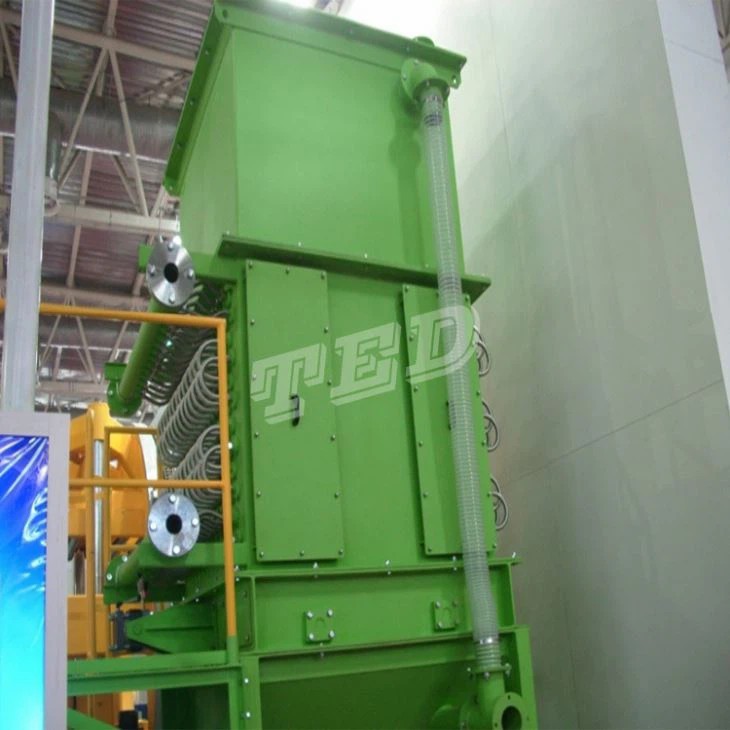
![Resin-sand Temperature Adjuster]() Resin-sand Temperature AdjusterSand-temperature adjuster using the wrong form of cooling tube, sand twists and turns, slowly down, full heat exchange, but also on the radiator wear, extend the service life. The use of countercurrent heat exchange form, the direction...view more
-
![Resin-bonded Sand Roll Type Regenerator]() Resin-bonded Sand Roll Type RegeneratorRoll type regenerator use of blower way to make sand boiling, sand in the high-speed rotation of the friction discs between each other friction, to achieve the purpose of stripping dust.view more
-
![Resin-bonded Sand Vortex Regeneratorvortex Regenerator]() Resin-bonded Sand Vortex Regeneratorvortex RegeneratorVortex regenerator for the casting workshop from the hard sand of the sand off the film regeneration, according to the seek different choice Single or multi-level use, characterized by: sand broken less, stripping rate is high, good...view more
-
![Crusher Machine]() Crusher MachineBruising mill mainly used for hard sand and old sand screening, stripping, in addition to dust and other auxiliary functions, the principle is:in the process of vibration between the sand and sand and the machine between the inner wall...view more
-
![Magnetic Pulley Separator]() Magnetic Pulley SeparatorThis series of permanent magnetic strong,Separation effect is good, small size, weight light, low energy consumptionview more
-
![Vibrating Conveyor]() Vibrating ConveyorVibrating conveyor for the welding parts structure, the body material used in all high-quality steel plate, the X-ray inspection, welding without defects, strong, resistant to vibration, no welding cracks and scattered phenomenon, sand...view more
-
![Resin-bonded Sand Molding Machine]() Resin-bonded Sand Molding MachineResin-bonded sandmolding machine with high-speed blade mixing cage sand mixer of the new technology, so that the sand evenly and more efficient,Send sand arm with a closed screw conveyor to reduce the environmental pollution, the size...view more


Types & Configurations
Semi-Automated Line: Manual net insertion and raw material loading paired with automated hydraulic pressing and conveyorized curing; optimized for medium-batch, high-mix custom abrasive production.
Fully Automated Line: Integrated robotic dosing, multi-station rotary presses, and continuous tunnel kilns; configured for high-volume, standardized cutting disc manufacturing (100mm-230mm diameters).
Heavy-Duty Snagging Wheel Line: Engineered for large-diameter (up to 900mm) foundry wheels utilizing heavy-hydraulic compactors and specialized multi-stage thermal curing profiles.
Working Principle / Process
Batching & Mixing:
Gravimetric weighing systems dispense exact proportions of phenolic resin, liquid wetting agents, aluminum oxide/silicon carbide grains, and fillers. High-shear planetary mixers eliminate agglomerates to ensure uniform resin coating.
Molding & Compaction:
Pre-determined mix weight is volumetrically fed into steel molds. Hydraulic presses apply controlled, multi-stage pressure profiles (up to 300 tons) with dwell times designed to expel trapped air and achieve target green density.
Thermal Curing:
Molded wheels undergo controlled heating cycles in electrical or gas-fired curing ovens. Temperature ramps follow strict thermal profiles (peaking between 160°C and 200°C) to fully polymerize the resin bond without thermal cracking or warping.
Finishing & Testing:
Post-curing inspection includes bore sizing, surface grinding, balancing, and destructive/non-destructive overspeed testing.
Gravimetric Dosing Accuracy: Load-cell-based weighing hoppers maintain batch consistency within +/- 0.5 percent, preventing density variations that cause wheel imbalance.
Closed-Loop Hydraulic Control: Proportional valves regulate pressing speed and tonnage curves, eliminating edge chipping and density gradients in high-diameter discs.
Multi-Zone Thermal Regulation: Curing ovens utilize forced-air convection with PID-controlled multi-zone heating, holding temperature variance to within +/- 2 degrees Celsius.
Vapor Extraction Integration: Enclosed mixing and curing hoods connect directly to centralized scrubbers, capturing volatile organic compounds (VOCs) and phenol emissions.
Technical Specifications
|
Parameter |
Specification |
|
Throughput Capacity |
3,000 to 12,000 pieces per 8-hour shift (dependent on disc diameter and thickness) |
|
Installed Power |
120 kW - 350 kW (varies by press tonnage and kiln length) |
|
Operating Pressure |
Up to 31.5 MPa (hydraulic system) |
|
Curing Temperature Range |
Ambient to 250°C (+/- 2 degrees Celsius accuracy) |
|
Compatible Product Diameters |
100 mm to 900 mm |
|
Control Architecture |
Industrial PLC with HMI touch panel and SCADA data logging |
Applications
Automotive Manufacturing:
Production of thin cutting discs (1mm-3mm) used in body-shop chassis fabrication and exhaust pipe trimming.
Foundry & Metallurgy:
Manufacturing heavy-duty depressed center wheels and snagging wheels for gate and riser removal on iron and steel castings.
Construction & Infrastructure:
Fabrication of reinforced masonry and concrete cutting wheels.
Manufacturing & Quality Control
Machining Centers:
Structural frames and press platens are face-milled on CNC gantry mills to maintain parallelism within 0.03 mm/m, preventing eccentric loads during pressing.
Hydraulic Assembly:
Manifolds and cylinders undergo 1.5x pressure testing for 4 hours prior to integration to eliminate leak paths.
Electrical Compliance:
Control panels are wired to industrial electrical safety standards, utilizing reliable switchgear and safety relays rated to Category 4.
Factory Acceptance Testing (FAT):
Each line undergoes a 72-hour dry-run test under simulated load, verifying cycle times, dosing tolerances, and interlock response times before crating.
Layout Adaptation: Factory floor footprints can be configured in linear, U-shape, or L-shape configurations based on available shop-floor dimensions.
Resin System Adaptability: Mixing agitators and feed screws are interchangeable to accommodate liquid phenolic resins, powdered resins, or solvent-based systems.
Tooling Integration: Custom steel molds, fiberglass net applicators, and paper label dispensers are engineered to match specific proprietary wheel profiles.

Selection Guide
Determine Output Target:
Match target annual volume to automated vs. semi-automated line configurations to avoid under-utilization or bottlenecking.
Verify Raw Material Specs:
Confirm whether the process requires dry-powder mixing or liquid-resin wetting systems to select the correct mixer drive and vacuum rating.
Evaluate Facility Utilities:
Ensure plant electrical capacity, compressed air supply (minimum 0.6 MPa, dried and filtered), and exhaust ventilation meet equipment consumption ratings.
Review Safety Interlocks:
Specify light curtains, emergency stop zones, and fume extraction ducting locations based on local environmental and safety mandates.
Frequently Asked Questions
As one of the leading resin-bonded line manufacturers and suppliers in China, we offer a wide range of products with superior quality. Please feel free to buy advanced resin-bonded line for sale here from our factory. Good service and punctual delivery are available.
Resin bonded Sand Automatic Moulding Machine, Resin sand Temperature Adjuster, resin bonded line